Invisible Function

Ephrata, Pennsylvania

Nothing on the wall. Everything in the room.

Motorized TV lifts, projector and screen lifts, hidden bookcase doors, motorized panels and invisible in-wall speakers. I pick the mechanism to suit the opening in front of me rather than the brand I happen to sell, and the millwork, the wiring and the finish work are all mine.

What the mechanisms do

Screen weight
40–200 lb
Vertical travel
24–60 in
Travel speed
0.5–1.6 in/s
Control
IR · RS-232 · IP · dry contact
Finish
Paint grade · veneer · level 5
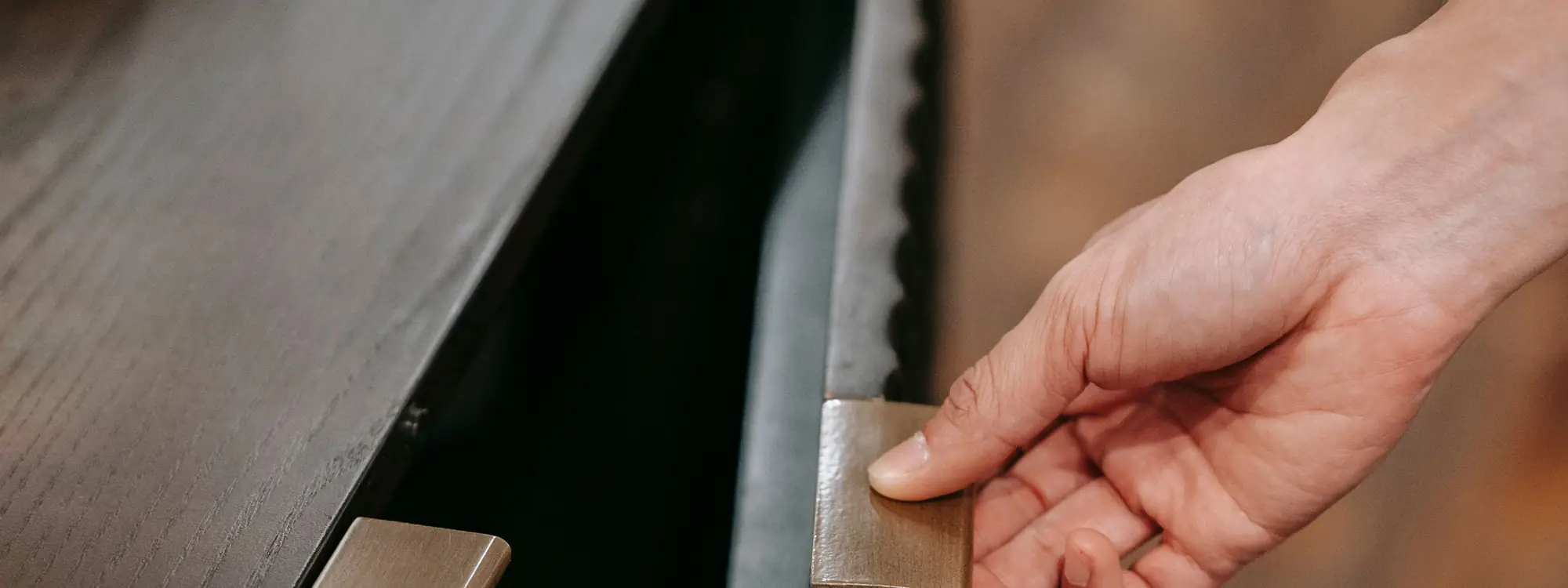
A hand opening a flush cabinet front by a slim aged brass edge pull, with a narrow shadow gap running alongside it.
Reference — aged brass edge pull on a flush front

Why this shop

Two decisions this business is built on

01

No brand to defend

A dealer sells the mechanism they carry, then asks the room to accommodate it. I start from the opening, the screen weight, the ceiling depth and the sight lines, and choose from whatever is genuinely built for that job — Auton, Nexus 21, Future Automation, Firgelli, Sonance and others.

Sometimes the right answer is a $900 actuator behind a plywood carcass. Sometimes it is a five-figure German ceiling lift. Either way you get the reasoning in writing, with the runner-up priced beside it.


02

One shop, four trades

A concealed screen normally pulls in a cabinet shop, an AV integrator, an electrician and a drywall finisher, with someone else keeping their dates aligned. When the panel binds or the reveal runs out along its length, each of them can point at the others.

Here the millwork, the mechanism, the low-voltage runs and the finish carpentry are one person's work — which also means one person to call when something needs adjusting in year three.

Mechanisms

Five things worth hiding

Every one of these is a surface that has to close flat, and something behind it that has to move without being heard.

Finishes

What it gets built out of

The finish schedule is usually settled before the mechanism is. These are the five that come up on nearly every job.

  • A smooth painted wall surface, close up, showing an even matt finish. Paint grade

    Poplar or MDF, sprayed to any sheen

  • Close-up of pale white oak with straight, even grain running vertically. White oak

    Rift or quarter sawn, clear or fumed

  • Close-up of dark walnut boards with strong figure and warm brown tone. Walnut

    Solid or veneer, matched across a run

  • A white plastered wall with visible trowel texture before final sanding. Level-5 plaster

    Skimmed flat where a mechanism meets the wall

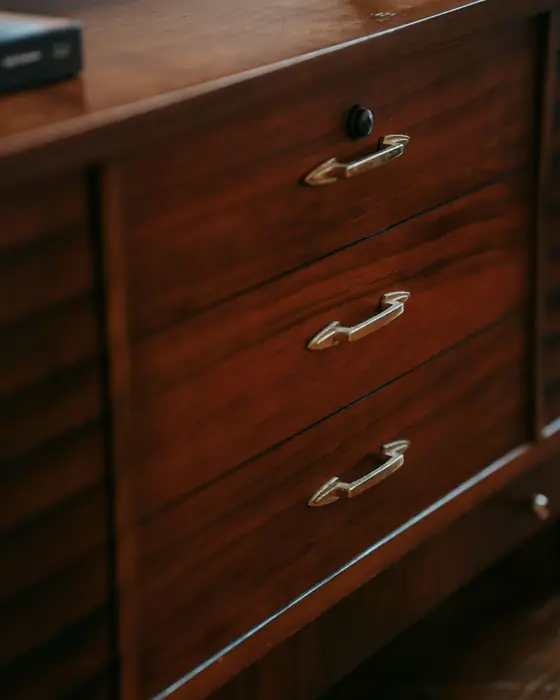
  • Dark timber drawer fronts fitted with slim aged brass pull handles. Aged brass

    Unlacquered, left to darken with handling

Material and hardware references, not project photography. Nothing on this site shows a finished job yet — that changes with the first one.

Stowed / deployed

Every project has exactly two states

A room where nothing reads as equipment, and the same room doing the thing it was built to do. Drag the pull, or use the arrow keys.

Photograph required — A
Living room, screen fully stowed. Locked-off tripod, eye height, wide enough to read the whole millwork run.
16/9  ·  /images/proof/stowed.jpg
Photograph required — B
Identical frame, identical exposure, screen fully deployed. Same tripod position, same lens.
16/9  ·  /images/proof/deployed.jpg
Stowed Deployed

These two photographs do not exist yet. This shop is new, and putting somebody else's project here would be the first dishonest thing on the site. The frame is specified, the tripod position is fixed, and the first finished install drops straight in.

For trade

Subcontract the part nobody wants to warranty

Integrators, cabinet shops, designers and builders: the lift is usually the one line item on the job that sits between two scopes. I take that line item, and the responsibility that comes with it.

What I take on

  • Mechanism selection against your spec, with a written second option
  • Shop-built cabinet, leaf or ceiling closure to your finish schedule
  • Install, low-voltage termination, commissioning and cycle testing
  • Drywall patch and finish where the mechanism meets the wall

What stays yours

  • The client relationship, the contract and the invoice
  • Control system, sources, racks and network
  • Your finish, your hardware schedule, your reveal dimension
  • Your name on the job — I don't badge the work

Ranges

Published numbers, because nobody else publishes any

Three of the common ones. The full page explains what moves a project to the top or the bottom of each range.

Install only, as a subcontract

You supply the mechanism and the millwork. I set it, wire it, commission it and finish where it meets the wall.

$600–2,000per mechanism

Lift cabinet, built and installed

Shop-built cabinet or ceiling closure, mechanism supplied and fitted, wired and finished on site.

$6,000–12,000complete

Hidden bookcase door

Structural leaf, pivot or concealed hinge hardware, latch, casework and an even reveal on all four sides.

from $8,500per opening

Sequence

Six steps, in this order, every time

01

Consult

A conversation about the room, the screen and what the client wants to be looking at when nothing is playing. Usually 30 minutes, on site or on a call with the elevation open.

02

Measure

Field dimensions, not plan dimensions. Ceiling depth, joist direction, stud bays, floor build-up, existing wiring, and how far out of square the opening actually is.

03

Specify

Mechanism selected against the real numbers, with the second-choice option written down and priced so the decision stays visible.

04

Build

Cabinet or leaf built in the shop in Ephrata. Mechanism mounted and cycled several hundred times on the bench before it goes anywhere near the house.

05

Install

Set, shimmed, wired, and adjusted until the reveal is even along its whole length. Drywall patched and finished by the same hands that cut it.

06

Handoff

Cycle the mechanism with whoever will use it, label the control paths, and leave the manual override, the spare fasteners and the mechanism documentation on site.

Where I work

Lancaster County outward

The shop is in Ephrata. Lancaster, Lititz, Hershey, York, Harrisburg and Reading are inside a comfortable day's round trip, which is what matters for a trade that involves a second visit for adjustment. West Chester and the Philadelphia suburbs are worth the drive for larger scopes — a full millwork package rather than a single lift.

Lancaster, PALititz, PAHershey, PAWest Chester, PA York Harrisburg Reading Philadelphia suburbs

Next step

Send me a room, an elevation or a screen model

Trade enquiries get a written mechanism recommendation and a price range within two business days. Homeowners, same — no showroom visit required to get a number.

spec@invisiblefunction.com  ·  (717) 555-0142  ·  Ephrata, PA